I won’t ask you What are you doing New Year’s Eve? as the song goes. But I am curious if you’re doing anything in the garden the week between Christmas and New Year’s Eve.
In our house, we call that “our bonus week,” because we give ourselves permission to do nothing and just be, with the hustle and bustle of a busy December behind us and the new year’s overly optimistic resolutions not yet looming.
I always like to find some excuses to go out in the garden a few times during this week, just to get some fresh air and blow out the cobwebs, as they say. And since I’m as introverted as they come, I cherish the moments of solitude in the garden where I get to recharge after holiday gatherings that have depleted my socializing reserves.
I also get to move around outdoors. This seems like such a chore when it’s cold outside, but really leaves me feeling a million times better afterwards.
Dear reader, if you’re also looking for a few excuses to go outside in the garden in the week between Christmas and New Year’s Eve, here are a few things you could do. And don’t worry if your garden is under a few feet of snow. There’s plenty to do that doesn’t require digging your way through it.
1. Anchor tall plants to prevent windrock.
Windrock sounds like the name of a cool band, doesn’t it? In the garden, windrock happens when these three factors converge:
tall plants + an exposed location + consistently strong winds
It’s especially a problem with plants that have fairly rigid stems, such as roses, buddleia and dogwood, when they get battered around by the wind. The stems turn into sails that, as they sway, dislodge the roots from the ground. Damaged roots will not have the same nutrient and water uptake as healthy roots. This, in turn, will weaken the entire plant.
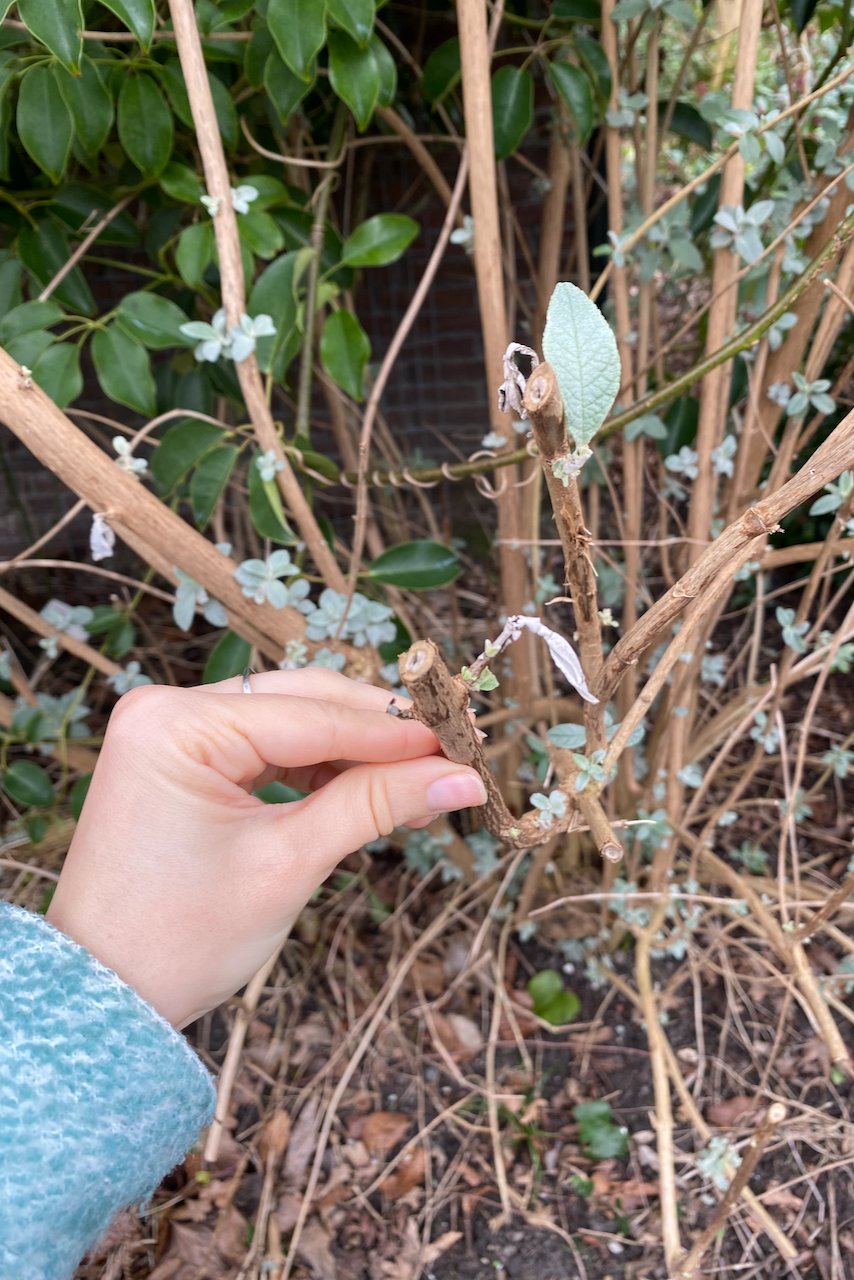
The best way to solve this problem is to prune about a third off the top of the plant, if possible. Then anchor the rest of the plant to strong supports. But don’t tie it too rigidly, because it still needs to have a little bit of slack to sway in the wind.
2. Check on your stored summer bulbs
No matter how good I think I’m getting at overwintering plants indoors, I always seem to hit a setback when I ignore the winter stash for too long. Follow-up is important, and it’s part of the process. That’s why I mention the regular check-in every time I write an article about overwintering tender bulbs, such as gladioli and dahlias, indoors.
We have to check on them at least monthly in order to catch problems early on.

Sometimes, the bulbs may not have dried properly before we put them into storage, and they develop mold. Other times, we may have missed a soft one that surreptitiously turned into a mushy mass in our basement. There may be critters snacking on the bulbs. Or they ended up in a spot that’s too warm or too bright.
I keep my tender summer bulbs on a shelf high up in my garage. So I take a few minutes to open each bag or crate, pick up the bulbs one by one and check for any damage. Any bulb that feels soft to the touch (or worse, has already shriveled up) gets to go on a long journey to the compost bin. The rest of the healthy bulbs get a bit of airflow in the process.
3. Firm in plants that have been lifted by frost.
If you’re gardening in a climate that gets a sandwich of warm and very cold days in the winter, you may know what I’m talking about. When temperatures fluctuate like this, the soil goes through repeated cycles of freezing and thawing. In turn, this causes the water in the soil to expand and contract, and with every cycle, the crowns of some plants are being pushed above the soil surface.

This phenomenon is called frost heaving, and it’s more common than you think. The crown part that’s now above ground is exposed to frost and cold winds, which may end up stunting the plant. But if we notice it in time and firm the crown back in the ground, there shouldn’t be much long-lasting damage.
If the ground is frozen and you can’t firm them back in the ground, add a thick layer of mulch to protect the exposed crown.
Perennials with a shallow root system are more likely to be affected by heaving. You can start by inspecting hardy succulents (such as hens and chicks, aka Sempervivum tectorum), strawberries, coral bells (Heuchera), elephant’s ears (Bergenia), blanket flower (Gaillardia) and pincushion flowers (Scabiosa).
Frost heaving is more likely to happen in areas that retain a lot of water. So make a note for next year that these are the spots where you’ll need to improve drainage.
4. There’s still time to buy bare root plants.
One of the things I absolutely adore about gardening is the planning aspect. I really love dreaming and imagining and researching, almost as much as I love getting my hands dirty.
The week between Christmas and New Year’s is the perfect time to browse plant catalogs online.
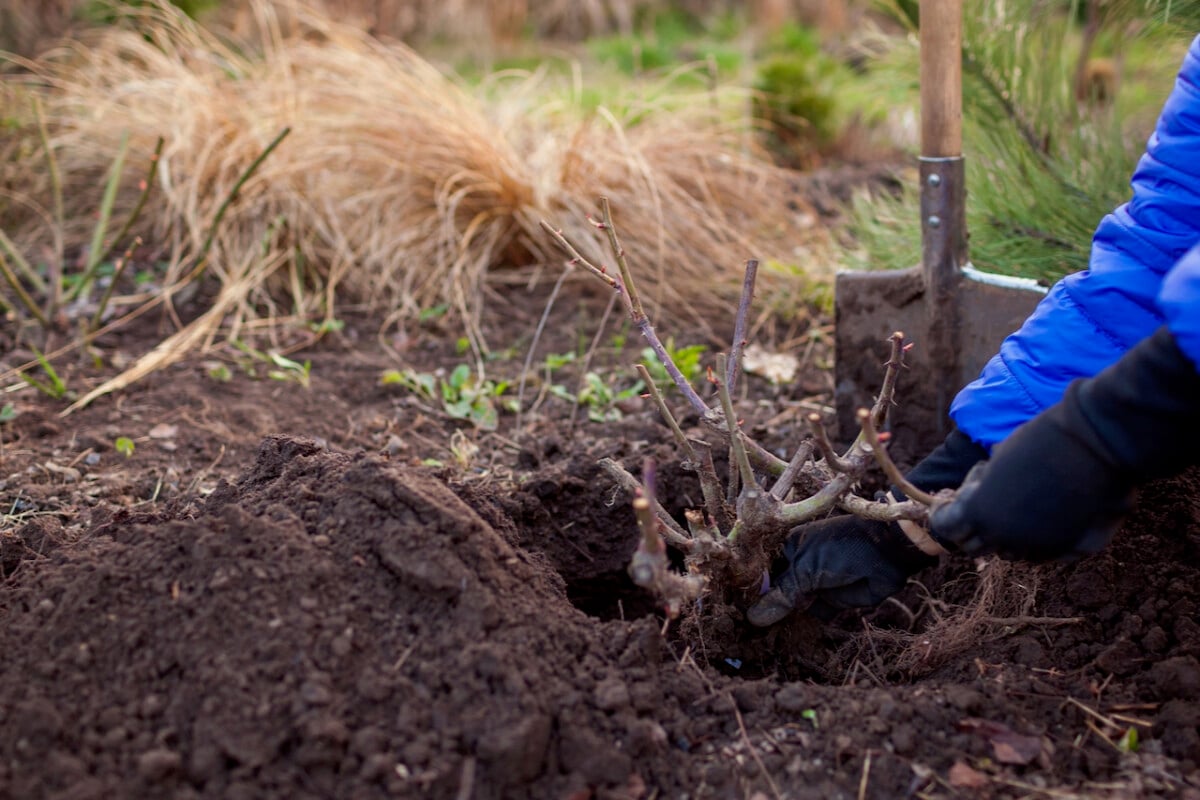
Keep in mind that here in the US, most nurseries will not ship bare-root plants until the spring. (Usually February at the earliest, but most often dependent on the shipping address for your growing zone.) So, while you can buy them, don’t expect plants to show up anytime soon.
But this is one of the best times of year to buy bare root plants. There is a great selection and you beat the spring rush. You’re far less likely to be met with an ‘out of stock’ notification for all the varieties you wish to buy.
5. Prune (some) dormant plants.
I know we don’t necessarily associate the height of winter with optimum pruning time. But there are some plants that we can prune only when they’re dormant, roughly from November until January.
We can remove dead, diseased or crossing branches from deciduous trees such as apples, pears, quinces and acers. We can also cut off suckers (young growth, especially coming from the roots or along the trunk) and any branches that are growing towards the inside of the tree.

If you’re growing soft fruit, such as raspberries and blackberries, now’s the time to prune the canes that have already fruited. But keep the canes, and I’ll show you how you can reuse them in my next tip.
For a longer list of plants we can prune in winter, have a look at this guide I wrote.
6. There’s still time to plant garlic.
In my temperate climate, garlic traditionally goes in the ground on winter solstice and comes out on summer solstice. Planting garlic before Christmas gives it a chance to experience that cold spell that makes it taste so intensely good.
However, this year I didn’t get a chance to plant it just yet, so I’ll be putting it in the ground between Christmas and New Year’s. My soil is not frozen yet (that’s more likely to happen in January around here), so it’s not too late to plant.

Garlic grows well in a sunny spot that’s relatively sheltered. But if you don’t have such a spot available, planting the cloves in a large container will also work.
I put the cloves in the ground about two inches deep (4 cm) and six inches apart (15 cm). And because I’ve had something digging out my garlic every year (possibly birds, but I’m not sure), I came up with a free way to protect them until spring.
I take the spiky raspberry and blackberry canes that I’ve just pruned and lay them over the garlic bed. I sometimes chop them down a bit more and criss-cross them to get better coverage that still allows garlic sprouts to grow through.
Just thinking of the first garlic shoots poking out of the ground when not much else is growing fills me with anticipatory joy.
7. We can continue to take care of wildlife.
Wildlife, whether we’re talking birds, insects or amphibians, need our help to pull through the cold months when resources are scarce. If you left some seedheads and berries in place for them, as I advised you in this article, then now’s the time to top up.

Nutritious nuts and seeds are a wonderful source of energy. But if you have any wrinkled fruit left over from the Christmas festivities – especially apples or pears, birds will love that too.
I also make sure they have a supply of fresh water in a clean dish: a glazed terracotta pot on a pot-turned-pedestal. I also take the dish to my garage every few days to defrost it and clean it.
8. Take the time to do some tool maintenance.
I’ll admit that this is my least favorite part of gardening, so I procrastinate on it as long as possible. (Yup, I see you shaking your head!)
I’m usually diligent about taking care of the things I own, but I’m also a tornado in the garden, jumping around from task to task, then just throwing my tools in storage at the end of the day.
No excuses, though, in this week between Christmas and New Year’s.

Cleaning, oiling, and sharpening are usually my preferred order of doing things. I start by giving all the tools a thorough cleaning to remove the grime and the sappy residue, followed by a thorough drying. (Here’s a great article on how to clean and sharpen hand pruners.)
Keep in mind that WD-40, while great for degreasing, is not a lubricant. Once you’ve used it to clean parts, follow up with a good multi-purpose oil to keep tools rust-free and moving freely.
If their blades have gone dull, that’s when I delegate the next task to my husband, arguably the braver of the two of us. A few runs on the tool sharpener (ALWAYS wear protective gloves when you do it), and my gardening tools are ready for a new growing year.
9. Set our seeds up for success with cold stratification.
I wrote an entire guide on cold stratification – just click this link – so I’ll just give you the gist here. Some seeds contain what’s called germination inhibitors – wax, oils or hormones that naturally seal the seed and prevent it from germinating until the conditions are just right.
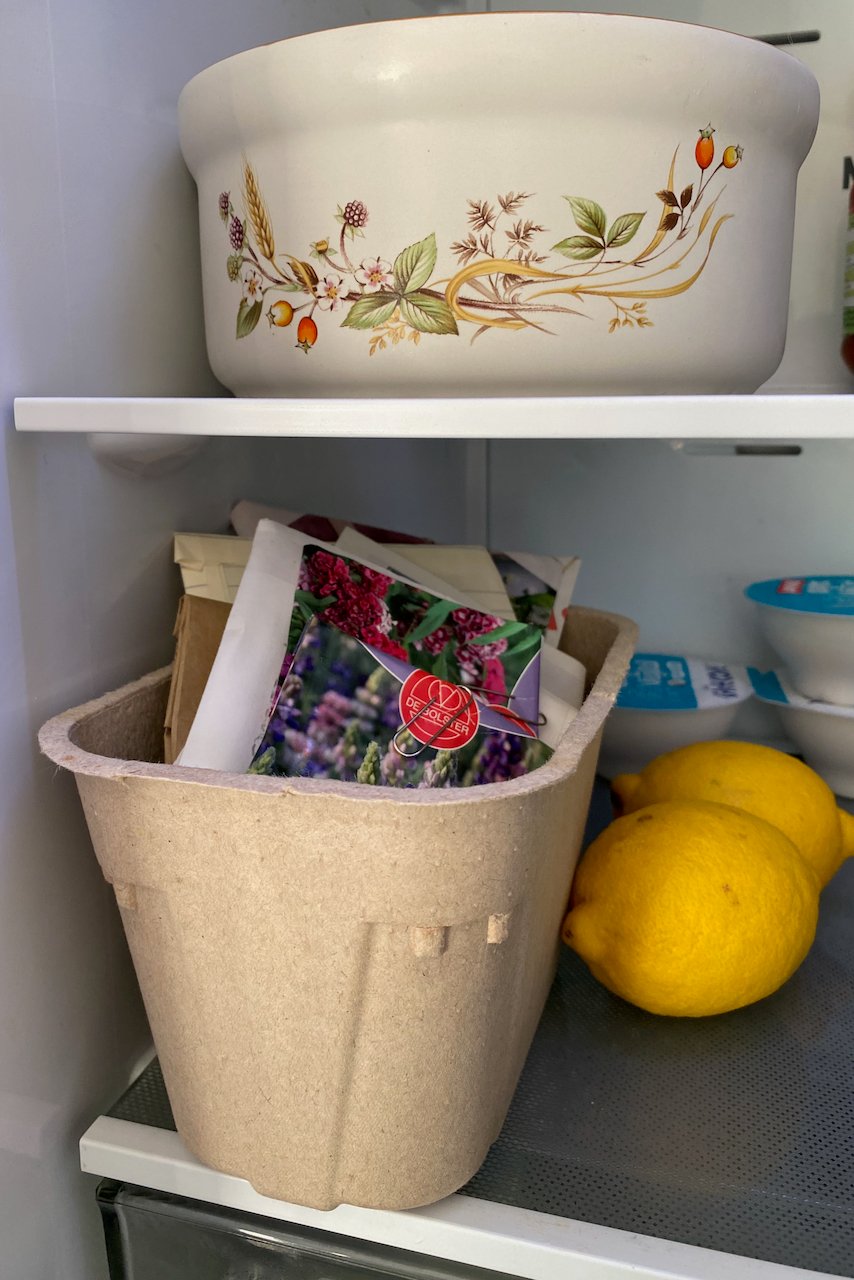
This is why a seed that has fallen in the fall, for example, will just lay dormant and not sprout until spring. Seeds are genetically coded to go through that period of cold and only then sprout. But when we collect the seeds and store them neatly indoors, we are depriving them of that cold.
The solution: stick the seeds in the fridge for a couple of months – or until you’re ready to plant them.
Here is everything you need to know about cold stratifying seeds in the fridge, as well as the seeds that require it.
10. Get our seeds and supplies organized.
Speaking of seeds, my green fingers are itching to get some seeds in the ground now. But I know that if I jumped the gun, I’d be wasting precious seeds and setting myself up for disappointment down the line. Unless, of course, we’re talking about winter sowing of perennials. (You can read more about that here.)
Where I garden, it’s too late to start seeds straight in the ground and too early to start them indoors. But I still want to plan and scheme the possibilities and potential of a new growing season. First, I have to deal with this mess.
This is how my seed boxes look now:

I’m starting by taking everything out and reorganizing my categories. I’ll then check the date on each seed bag, discard (or de-prioritize) the oldest seeds and arrange the remaining ones in order of planting.
A few years ago, I started a spreadsheet of all the seeds I have and all the ones I would like to try growing. I don’t update the sheet as often as I should, but there’s no excuse to skip the updating now.
I think this quiet week between Christmas and New Year’s is the perfect time to reflect on what I want more of, what I want less of, and what things I’m willing to take a gamble on.
Both in my garden and in life in general.
Get the famous Rural Sprout newsletter delivered to your inbox.
Join the 50,000+ gardeners who get timely gardening tutorials, tips and tasks delivered direct to their inbox.