
It happens to so many of us each year. You buy a cheery poinsettia in the hopes that it will be a lovely (and easy) addition to your holiday décor. But now it’s losing leaves, and you’re wondering if it’s going to make it through the holidays. Luckily, it’s pretty easy to pinpoint what’s gone wrong with these plants, and even easier to fix it. Let’s take a look.
1. Temperature Stress
Poinsettias are grown in commercial nurseries in an environment of consistent conditions. Consistent light, water and temperature.
On its journey to your home, the plant can experience vast fluctuations in temperatures, going from the greenhouse to the delivery vehicle, to being displayed at the drafty entrances of stores, and culminating in a cold car ride home, only to be roasted by the fireplace.
It’s no wonder temperature stress is the number one reason poinsettias lose their leaves.
You can minimize cold stress on the trip home by covering your poinsettia with a paper bag or a reusable shopping bag before leaving the store and making sure your car is warmed up before putting your poinsettia inside.
These plants prefer warm temperatures between 65-75°F during the day, and nighttime temperatures no lower than 60°F. So, the average home is ideal. However, if you keep your plant near a cold window or an exterior door, it may get blasted by chilly air, which will lead to lost leaves.
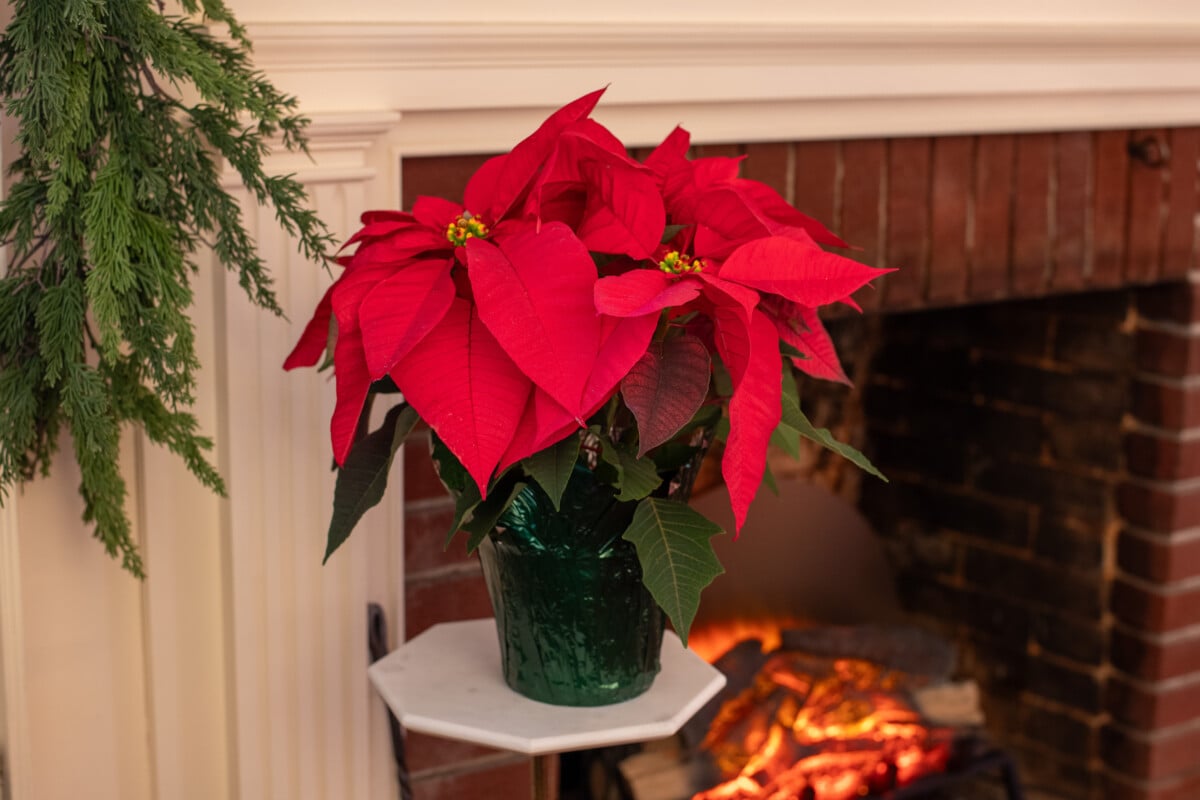
On the other side of that coin, displaying them next to fireplaces, heaters, radiators, and other heat sources can cause temperature stress and dropped leaves, too.
Consistent temperatures will keep your poinsettia happy and healthy.
2. Water Stress
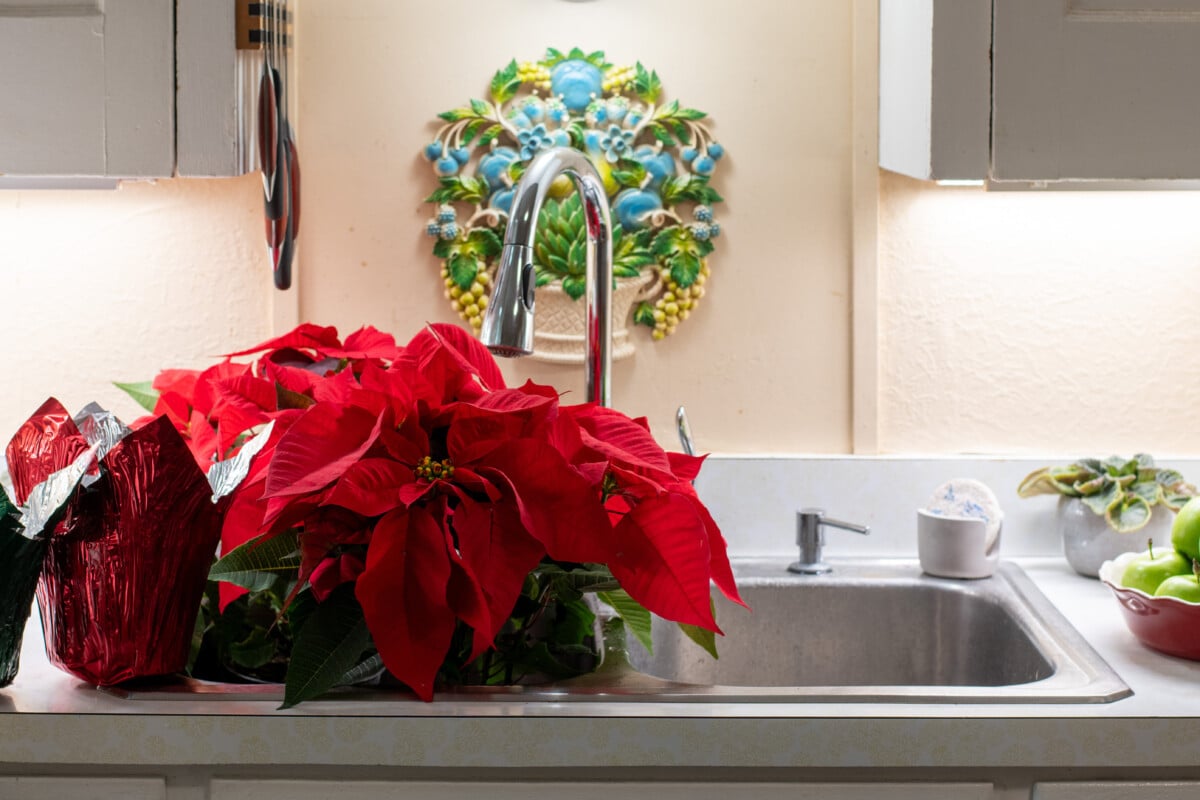
Both overwatering and underwatering can cause a poinsettia to drop leaves. But would you guess that the more common of the two is overwatering? Once the poinsettias leave the commercial grower, they end up in grocery stores, home goods stores, and even hardware stores.
My point is, they end up in stores where plant care isn’t the priority, and far too often, store employees get a little overzealous with the watering can.
So, by the time you bring your poinsettia home, it’s often waterlogged and may even have developed root rot. Unsurprisingly, it will begin to lose leaves shortly thereafter.
To avoid this, check the soil of the plant before you buy it.
If it’s very wet or has green algae growing on top of the soil, you’ll want to look for a different plant. Soil should be evenly moist, but not soggy or dried out.
When you water your poinsettias, remove the decorative, protective wrapper from around the pot and put the plants in either the bathtub or the kitchen sink. Water them, then let them drain thoroughly before putting the wrapper back on. This ensures the plant isn’t sitting in standing water.
A note about root rot: If the plant is quickly dropping leaves and the soil is quite damp, carefully lift the plant out of its pot. The potting mix should have a pleasant earthy smell. If the roots are brown, slimy or if it has a rotting smell, the plant has succumbed to root rot.
At this point, it’s much easier to dispose of the plant and replace it rather than trying to save a seasonal, decorative plant.
Underwatering can also cause poinsettias to lose leaves, although this is less common. Most of us have a habit of reaching for the watering can the second we see drooping leaves. So, unless you’ve completely forgotten to water your plant for more than a week or two, underwatering is unlikely.
However, you may want to make sure your poinsettia isn’t near a heat source that could be drying it out faster. You end up with the double-whammy of temperature, water stress and number three on this list.
3. Low Humidity

You would think that for a plant that prefers warmer temperatures, a house would be the perfect environment for them to thrive. But if you live in the colder regions of the States and Canada, Christmas coincides with the heating season. And nothing dries out the air in our homes quicker than turning on the heat.
Poinsettias, like all houseplants, need to be kept in a humid environment to do well. They photosynthesize and “breathe” better when the air around them is sufficiently moist.
You can do this easily in one of two ways.
Place a pebble tray beneath your plant. A pebble tray is simply a shallow dish filled with pebbles, then filled with water. You want the water level to be slightly below the pebbles, so that the plant sits on top of them, rather than sitting in water.
The water evaporates around the plant, providing localized humidity.
The other option is the method I use in the winter because it helps me as well as my plants. I run a couple of warm mist steam vaporizers around the house during the heating season.
I have used both traditional humidifiers and cold mist vaporizers and found both hard to clean and breeding grounds for bacteria and weird smells.
In the end, I prefer warm mist steam vaporizers as they warm the air much better than cold mist. Their simple setup makes them infinitely easier to clean and far less expensive than fancier cold mist setups. (Most are under $20) Not to mention, they do a much better job of humidifying the air.
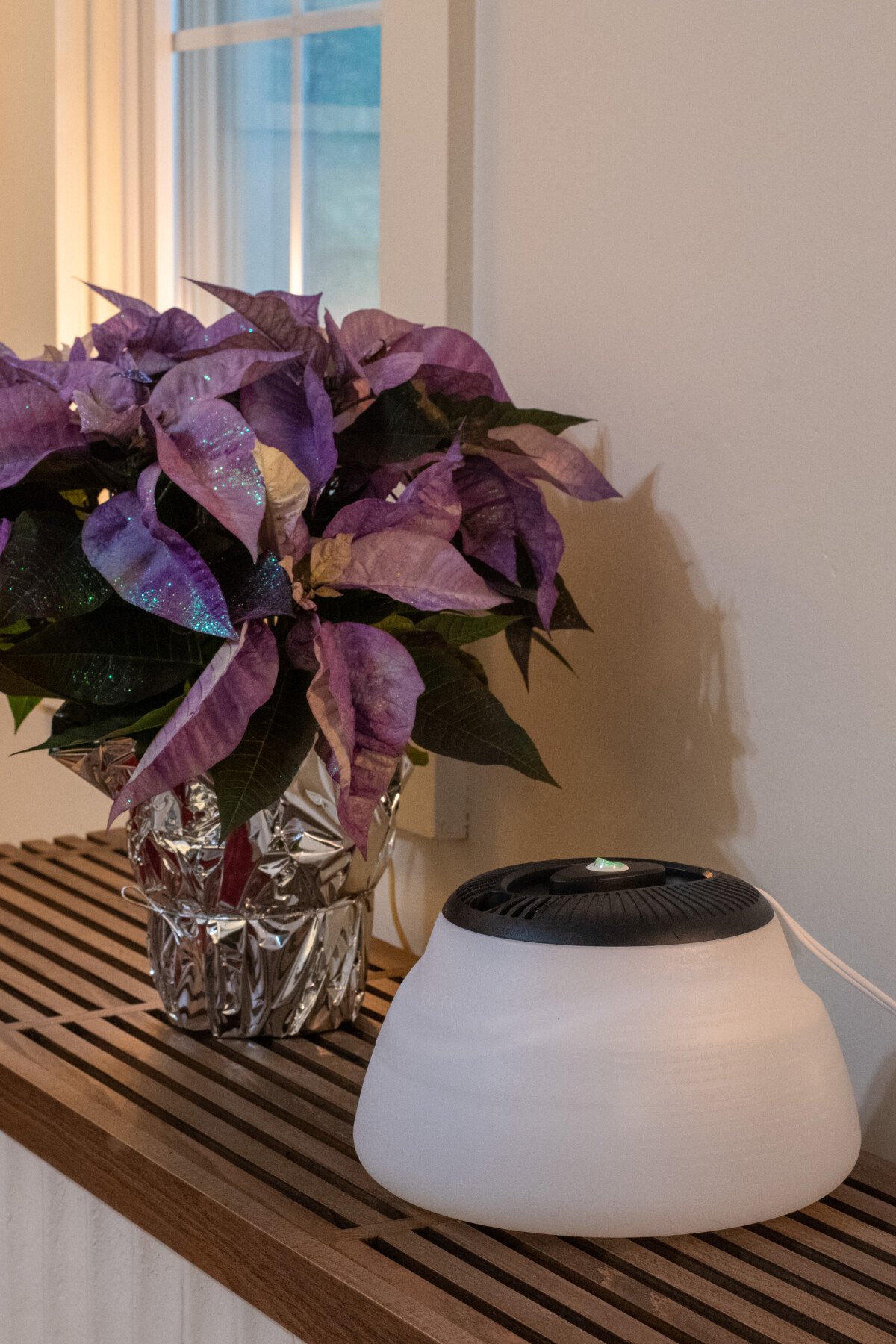
My nasal passages, my skin, and my plants are much happier with the warm mist. Of course, if you have small children or pets, you’ll need to set up the vaporizer out of their reach.
Whichever method you choose, correcting low humidity around your poinsettia will put a stop to dropping leaves and give you a much happier and vibrant plant.
Early Intervention
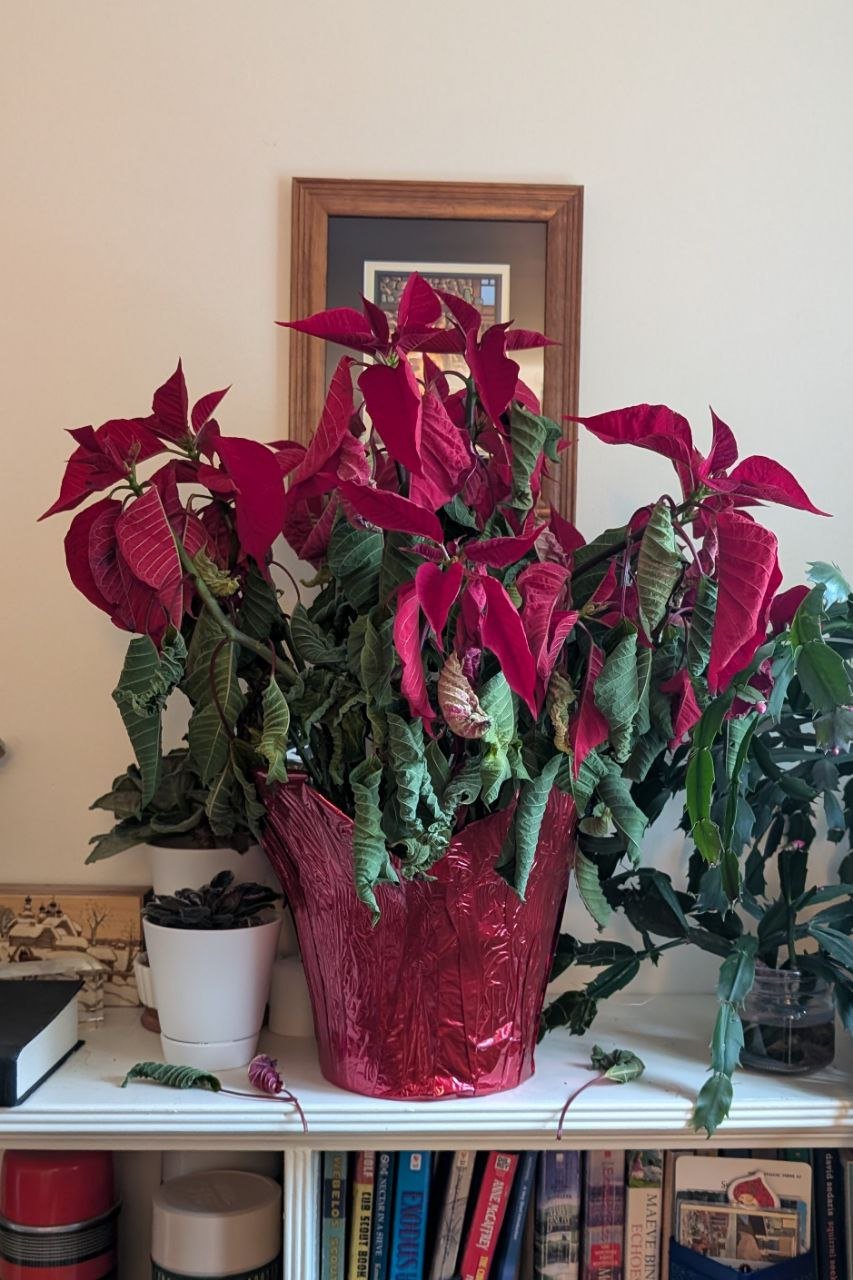
For the most part, if you catch these issues early, you can put a stop to lost leaves and continue to enjoy your poinsettia through the holidays. Don’t be put off if, even after you correct an issue, you still lose leaves for a few days. Those leaves were already dead; they just hadn’t fallen from the plant yet.
It can take a few days for the plant to readjust. But after that, you shouldn’t see more leaves dropping.
Of course, if you don’t catch the issue in time, you may lose enough leaves that the plant looks sparse and sad. At that point, you have to decide if you want to correct the issue that caused the plant to drop leaves or replace it with a new poinsettia, and a lesson learned that will help you care for the new one better.
4. Natural Dormant Period
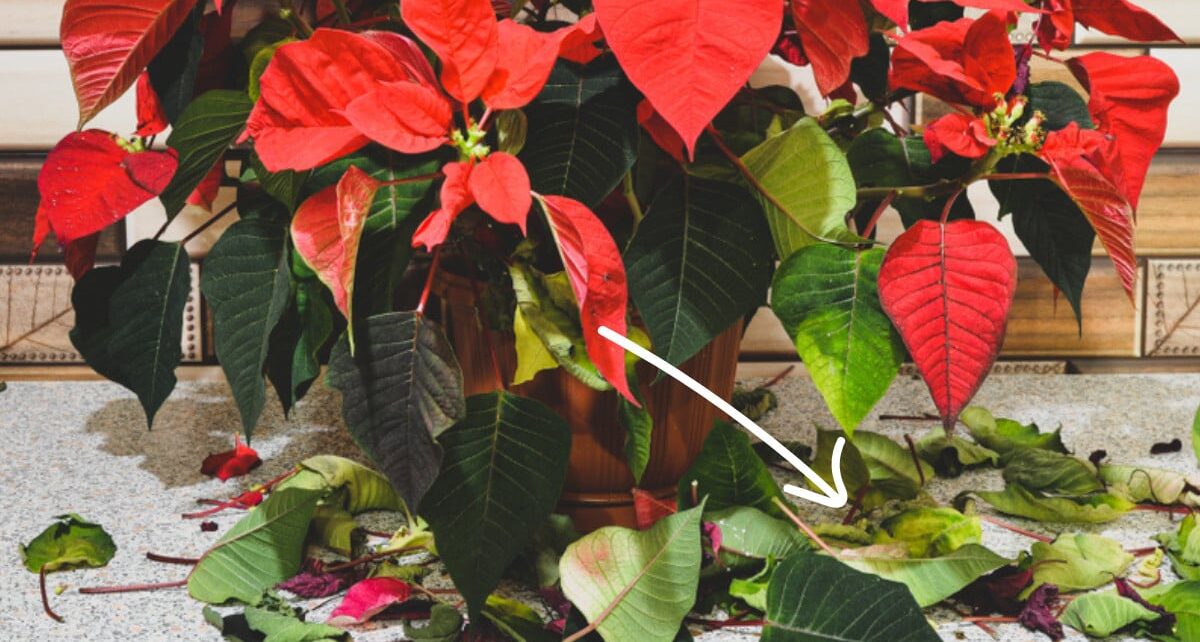
The final cause for poinsettias to lose their leaves happens toward the end of the holidays, in late December or early January. If you’ve been rolling along with a happy plant and suddenly find dropped leaves surrounding it like so much discarded wrapping paper, it’s likely just done for the season.
(Aren’t we all by that point?)
Poinsettias naturally enter a period of dormancy after they bloom. Essentially, they take a long winter nap after their showy display of color. And who can blame them? That beautiful display of Christmas-red leaves took a whole summer of storing up energy and nutrients to make.
The plant needs time to rest and reset for the next season.
As dormancy commences, the poinsettia will lose its leaves. It will not grow or produce buds, and it needs less water. Most of us toss these sad-looking plants when the holidays are over. After all, they’ve done their job. The show is over.
But it doesn’t have to be.
Poinsettias make deceptively easy-to-care-for houseplants, and with a little trickery in the fall, you can get them to turn red again in time for the holidays. Despite our propensity to throw them away, they are quite long-lived in the wild, often living for decades. As well-cared-for houseplants, there’s no reason why they can’t last that long, too.
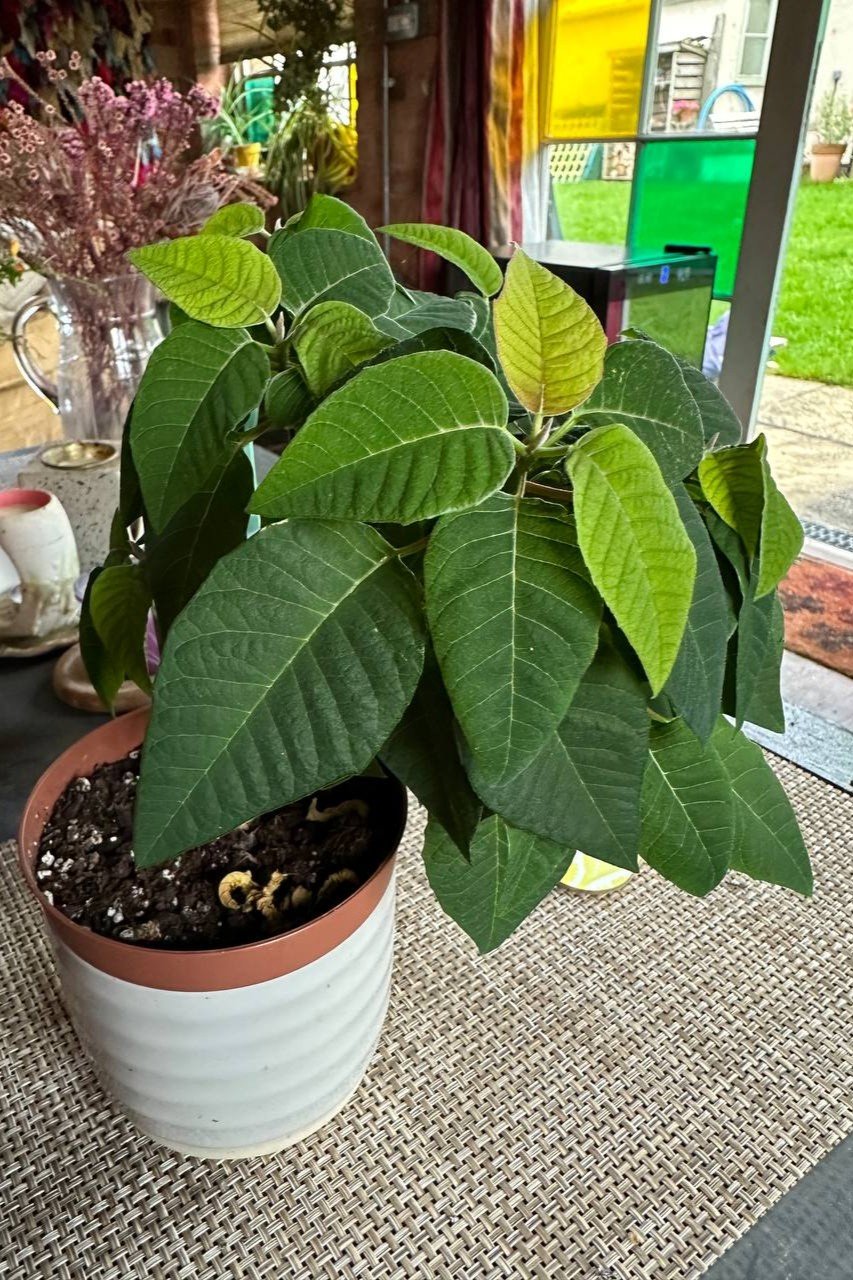
Just think, the poinsettia you bought while grocery shopping this November could easily make an appearance next Christmas, doubled in size and covered in red leaves. And in the meantime, you get to enjoy a bushy houseplant with vibrant, lime-green foliage this summer.
If you want to know how to care for them in the off-season and get them to turn red again, you’ll want to click here. (They really are quite pretty plants, even when they aren’t in fancy dress.)
Poinsettias might seem like the Goldilocks of holiday plants, but they’re kind of like you and me. They just want to be warm and well-hydrated during the holidays. (Please don’t water your plants with wine.) If you take care of those basic needs, you’ll be rewarded with healthy, beautiful plants right into the New Year.
Get the famous Rural Sprout newsletter delivered to your inbox.
Join the 50,000+ gardeners who get timely gardening tutorials, tips and tasks delivered direct to their inbox.