The holidays have a way of making everything look charming – even those invasive plants that really shouldn’t come anywhere near your garden. A sprig of mistletoe over the doorway? Lovely. Ivy tumbling down a fireplace? Cozy. Evergreen vines twinkling with lights? Festive perfection.
But plant some of these “holiday classics” outdoors and you may be inviting a long-term ecological headache. Some of the prettiest seasonal plants on your list of winter gardening ideas are also among the most aggressively invasive plants in the US, smothering native species, harming wildlife habitats, and leaving you with years of clean-up.
With that in mind, then, here are three deceptively festive plants to avoid, as well as a few tips on what to plant instead.
1. Mistletoe
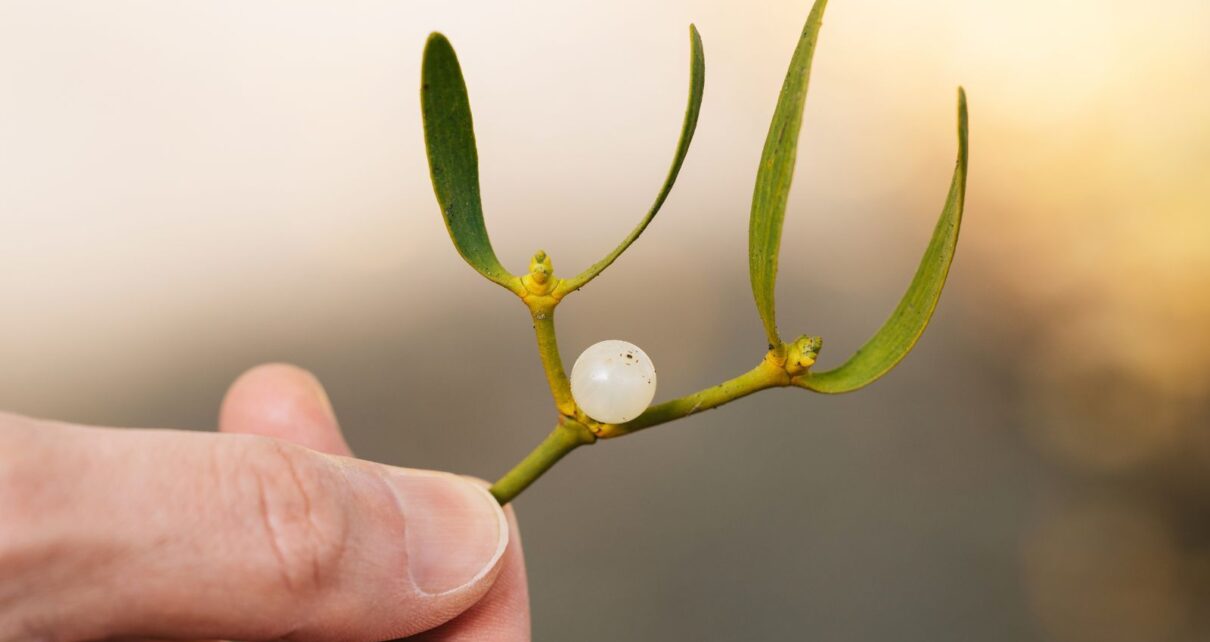
We adore kissing beneath it in December, but mistletoe (Viscus album & Phoradendron spp.) is, botanically speaking, a parasite. It latches onto host trees and siphons off water and nutrients. Over time, repeated infestations weaken branches, stunt growth, and make trees more vulnerable to drought and disease.
In the US, several mistletoe species are classed as destructive pests, particularly in the South and Southwest. Some states even recommend professional removal because heavy infestations can kill mature trees.
Hang faux mistletoe indoors instead, then, or grow a small evergreen shrub like sweet box (Sarcococca, USDA 7–9) for glossy leaves and subtle winter fragrance.
2. English Ivy

(Image credit: Alexander Denisenko / Shutterstock)
We know, we know; the holly and the ivy (Hedera helix) are both beautiful when full grown, but English ivy is the ultimate “looks innocent at Christmas” culprit. Indoors, it’s lovely in wreaths and winter arrangements. Outdoors, it behaves like a Marvel villain set on conquering every surface in sight.
It spreads rapidly by rootlets and seeds, smothering undergrowth, girdling tree trunks, and creating monocultures where wildlife can’t thrive. Many US states now classify it as invasive, particularly in the Pacific Northwest, Mid-Atlantic, and Southeast.
Choose native, wildlife-friendly vines like Virginia creeper (USDA 3-9) or American wisteria (USDA 5-9) instead. Or, alternatively, pot some English ivy up and keep it in your bathroom; it’s brilliant at reducing condensation!
3. Wintercreeper

(Image credit: Alena Zharava / Getty Images)
Wintercreeper (Euonymus fortunei) is the holiday plant equivalent of that guest who seems polite when they arrive… then immediately makes a point of reorganizing your kitchen cabinets, eating your favorite snacks, and taking command of the remote control.
Beautiful, evergreen, and often used in festive displays, it’s also one of America’s most persistent invasive groundcovers. It spreads by seeds, runners, and stems that root wherever they touch soil. Once established, it forms thick mats that choke out wildflowers, seedlings, and even shrubs. Several states place it on their no-plant lists.
Try creeping phlox (USDA 3-9) or bearberry (USDA 2-6) for less aggressive winter-green groundcovers that promise to stay in their lane.
Holiday plants well worth growing at home:

American Plant Exchange
American Plant Exchange Holly Fern

The Three Company
Live Aromatic Christmas Tree Shaped Rosemary in Deco Cover

Generic
5 Christmas Fern Roots/rhizomes
Holiday décor? Go wild. Outdoor planting, though? Choose wisely.
With a little planning, you can keep your landscape festive, and protect your local ecosystem. And, if Ebeneezer Scrooge ever turned his hand to gardening, we suspect he’d have said that’s what Christmas is all about.